
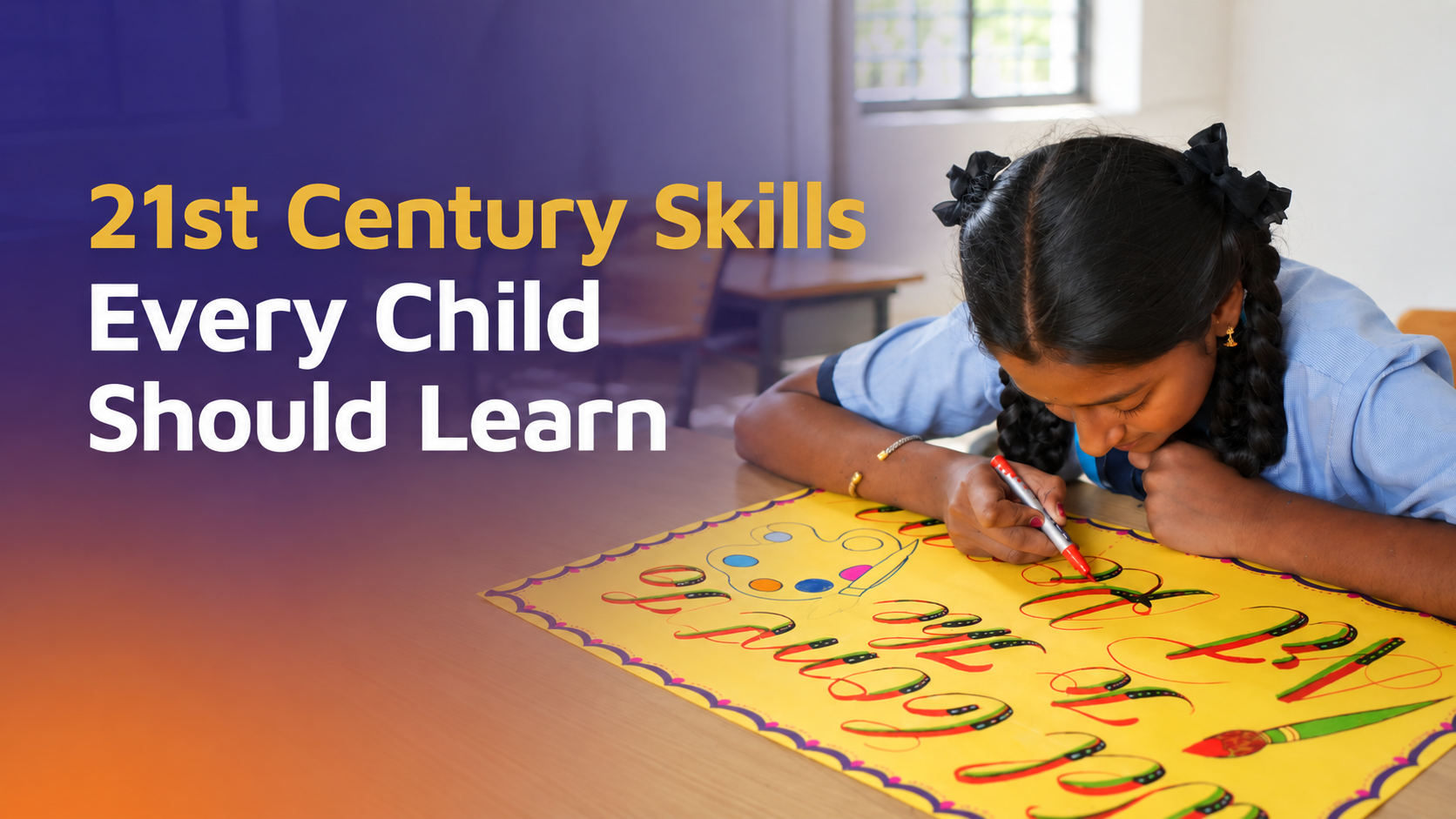
Every school website in Bengaluru now promises 21st century skills. Most of them mean it. Very few of them can tell you what they are doing on Wednesday morning that produces one.
The phrase has been worn smooth by overuse, which is a pity, because underneath it sits something real: a short list of capabilities that hold their value while the specific content of a job does not. This page sets out that list, the evidence behind each item, the strongest argument against the whole idea, and a way to test any school's claim in a ten-minute conversation.
21st century skills are the transferable capabilities a child needs to learn, work and live well in a fast-changing world: critical thinking, creativity, communication, collaboration, self-regulation, emotional and social skill, and digital literacy. They are taught alongside subject knowledge, not instead of it.
That last sentence is the one most schools get wrong, and we will come back to it.
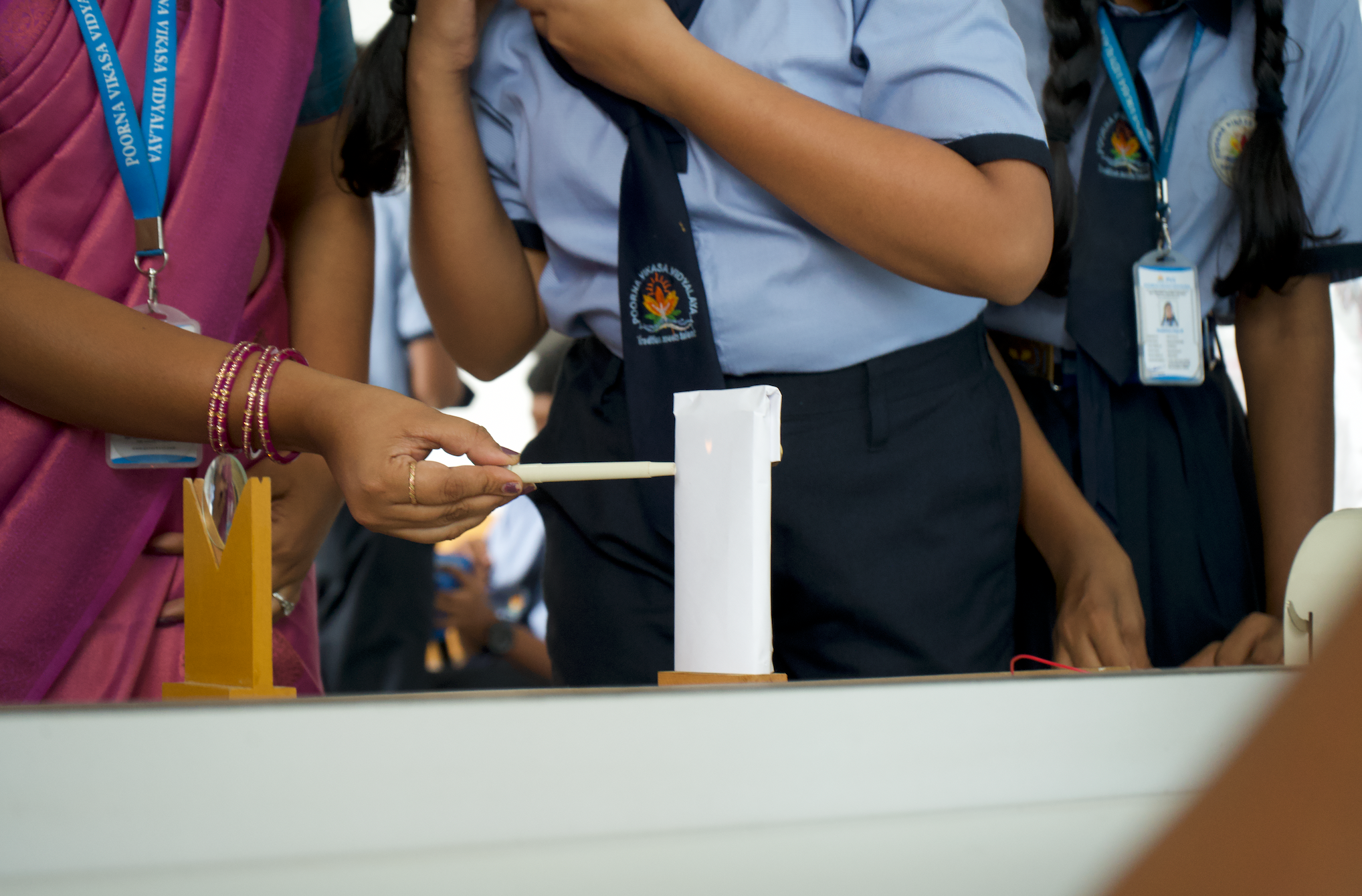
The clearest signal comes from employers rather than educators. The World Economic Forum's Future of Jobs Report 2025, published in January 2025, found that 39% of workers' core skills are expected to change by 2030. Analytical thinking was named essential by 70% of employers, resilience, flexibility and agility by 67%, with leadership, creative thinking and motivation and self-awareness completing the top five. The fastest-growing skills were AI and big data, networks and cybersecurity, and technological literacy.
Read the shape of that list. Four of the top five are not technical. The technical skills are the ones growing fastest and going obsolete fastest. That combination is the entire argument for teaching a child how to think rather than only what to know.
The Indian evidence points the same way from the other end. ASER 2023 "Beyond Basics", released on 17 January 2024, surveyed 34,745 young people aged 14 to 18 across 28 districts. Close to 90% had a smartphone in the household and about 80% could find a specific video on YouTube. Yet only 43.3% could solve a three-digit by one-digit division problem, and only around 10% could handle a financial repayment calculation. A generation with fluent access and thin reasoning is exactly the failure mode these skills are meant to prevent.
Note the right-hand column. Almost every school does the fourth column sincerely. The difference between a school that builds these skills and one that advertises them is visible there.
The most important thing to understand about critical thinking is also the least convenient: it is not a general-purpose muscle. In their widely cited essay 21st Century Skills: The Challenges Ahead, Andrew Rotherham and cognitive scientist Daniel Willingham put it directly "without content knowledge, we often cannot use thinking skills properly and effectively."
A child cannot think critically about the water cycle, a poem or a news claim about vaccines without knowing a good deal about water, poetry or immunity. Critical thinking is not a free-floating skill that can be trained in the abstract. It runs on knowledge. The schools that get this right teach demanding content and make children argue with it. The schools that get it wrong drop content in favour of a weekly thinking-skills period and produce children who are confidently wrong about everything.
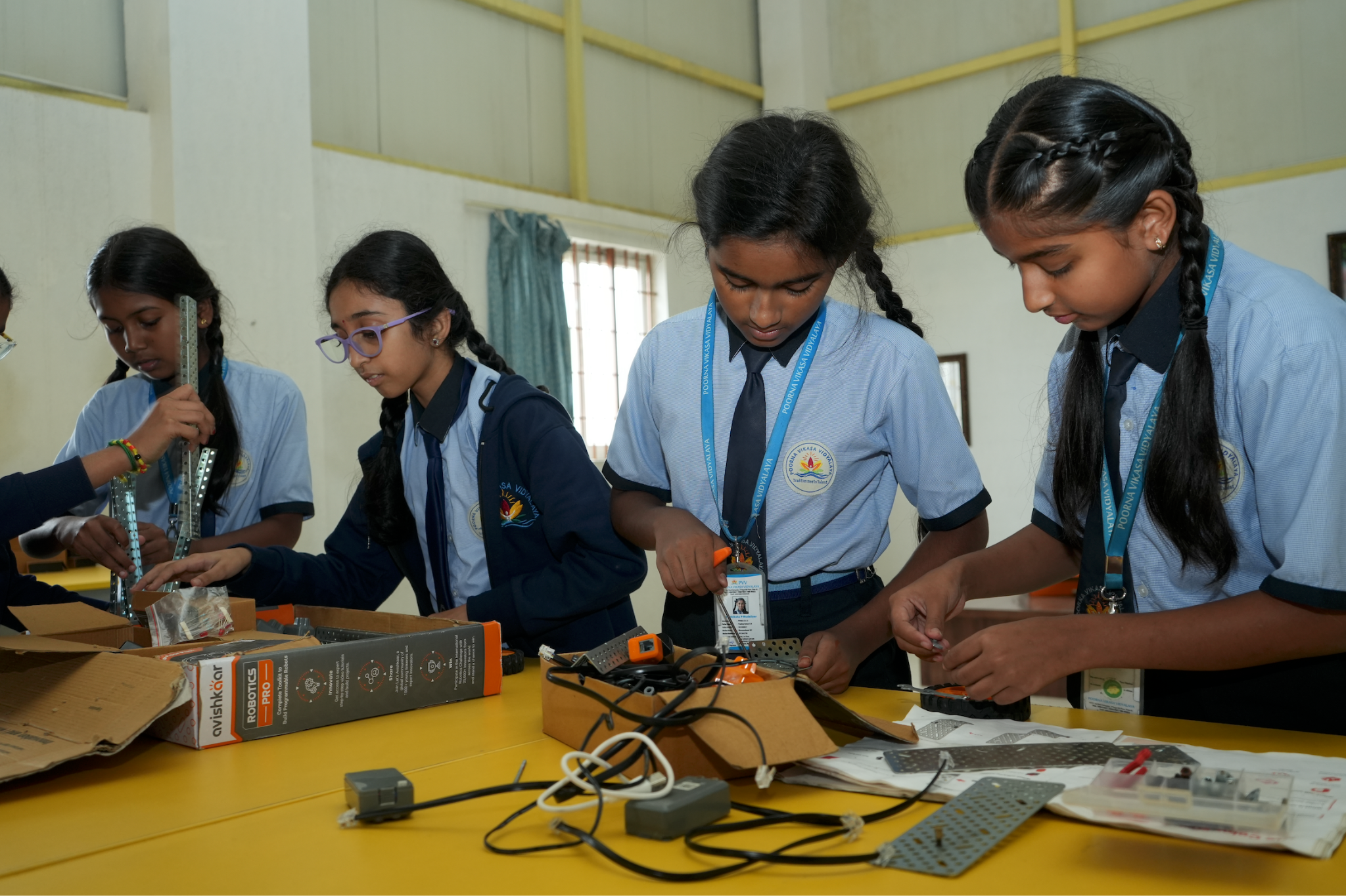
Creativity is now measured internationally, which has usefully deflated some myths. In PISA 2022's creative thinking assessment, released in June 2024, the OECD average was 33 points out of 60, and roughly one in five students across OECD countries struggled with basic creative tasks.
Two findings matter for parents. First, creativity is not simply a by-product of being academically strong: about half of top maths performers were also strong creative thinkers, but students sitting near the maths average were equally likely to score high or low on creative thinking. It is a separate thing, and it has to be taught. Second, teaching changes it students whose teachers valued creativity were 27% more likely to suggest original ways to improve someone else's idea. The gap between advantaged and disadvantaged students was 9.5 points, notably smaller than in maths, reading or science, which makes creativity one of the more equitable things a school can invest in.
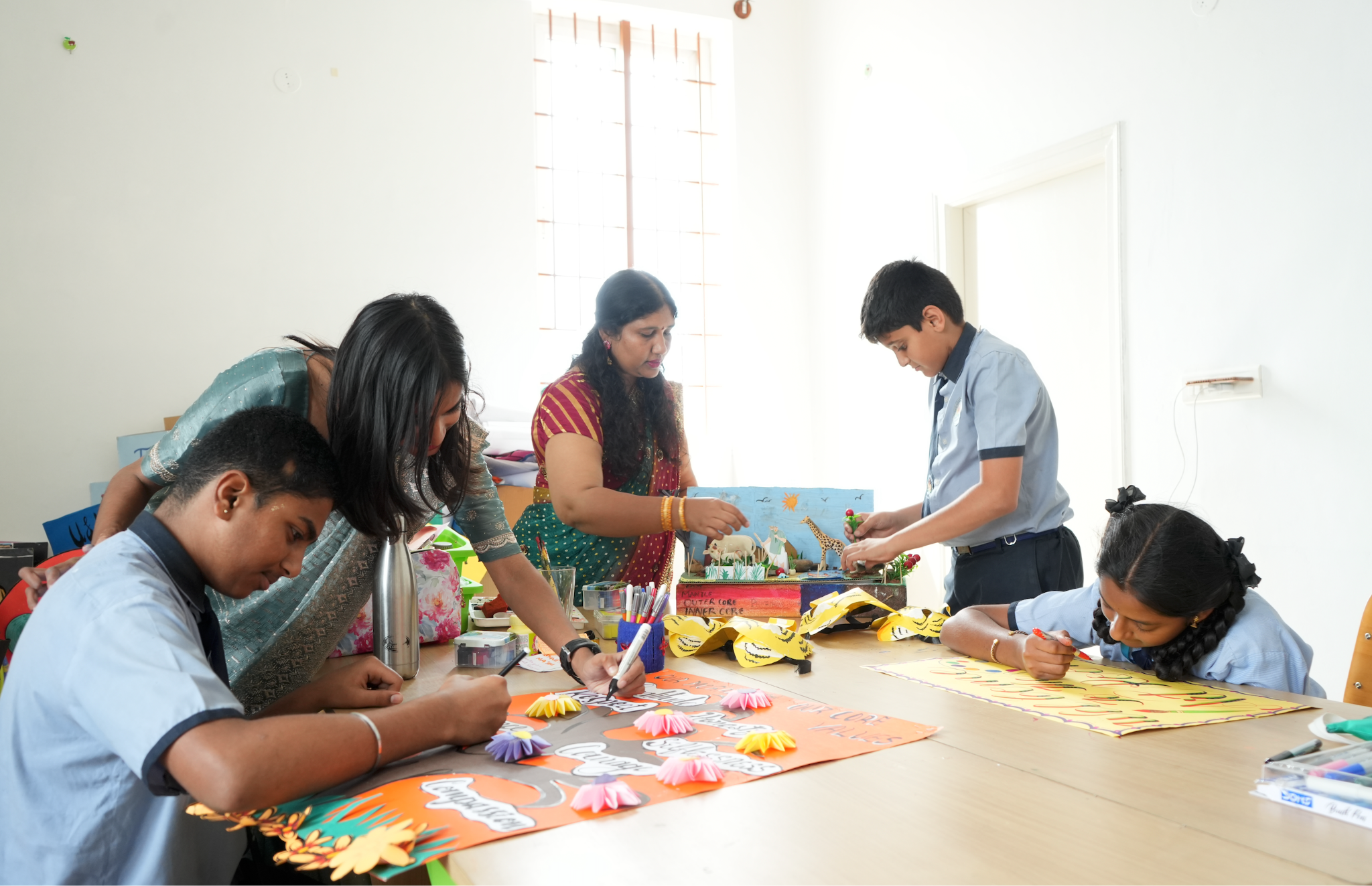
These two are the easiest to claim and the easiest to fake. A group project graded as a single mark teaches one child to carry four, and four children that carrying is optional. Real collaboration requires individual accountability inside the group task assigned roles, individually assessed components, and a teacher who has watched the process rather than only the poster.
Communication is similar. It is built by frequency, not by occasion. A child who explains their method to the class twice a week for a year is a different communicator from one who enters the annual elocution contest. Our piece on how extracurricular activities affect academic performance covers where the strongest transfer effects show up.
This is the quietest skill on the list and, by the evidence, possibly the most valuable. The Education Endowment Foundation rates metacognition and self-regulation at eight additional months of learning progress, at very low cost, drawn from 355 studies. Few things in schooling offer that return.
The EEF attaches a caveat worth repeating: a meaningful share of those studies were run by organisations connected to the approaches being tested, and "it can be difficult to realise this impact in practice." The mechanism is unglamorous. It is a teacher saying out loud, "I'm stuck, so here's what I'm going to try first, and here's how I'll know if it worked" every day, in every subject, until children narrate their own thinking that way.
The evidence base here is unusually strong for something so often dismissed as soft. Durlak and colleagues' meta-analysis in Child Development pooled 213 school-based programmes covering 270,034 students from kindergarten to high school. Social and emotional skills improved substantially, with an effect size of 0.57. And academic achievement rose too an effect size of 0.27, which the authors translate as an 11 percentile-point gain.
The delivery finding is the practical one. Programmes worked when run by regular classroom teachers as part of normal school routine, which is to say this is not a job for a visiting specialist once a term.
Digital literacy has stopped meaning "can operate the device." Every child can operate the device. It now means: can you tell where this claim came from, can you check it, and do you know that a confident AI answer and a correct one are different things?
This belongs inside subject teaching, not in a separate computer period. A history lesson where children compare an AI summary against a primary source teaches more digital literacy than a term of software instruction. NEP 2020's introduction of coding from Grade 6 is a floor for this, not a ceiling.
Any page that presents this list as settled wisdom is skipping the serious criticism, so here it is.
The first objection is that these skills are not new. Rotherham and Willingham are blunt about it: critical thinking and problem solving have been required of humans since the invention of tools. What has changed is "the extent to which changes in our economy and the world mean that collective and individual success depends on having such skills." So the honest claim is about universality, not novelty.
The second objection is sharper. Thinking skills largely do not transfer between domains. Someone who reasons expertly about cricket statistics does not automatically reason well about a medical claim. This means "we teach 21st century skills" is close to meaningless unless a school can say in which subjects and through what content.
The third is a warning about implementation: "without better curriculum, better teaching, and better tests, the emphasis on '21st-century skills' will be a superficial one that will sacrifice long-term gains for the appearance of short-term progress."
We quote the criticism because it is the correct standard to hold us to as well.
This is not optional in Indian schooling, which surprises many parents.
The National Education Policy 2020 directs that curriculum content be reduced "to its core essentials" in order to make space for "critical thinking and more holistic, inquiry-based, discovery-based, discussion-based, and analysis-based learning." It introduces coding from Grade 6, vocational exposure with hands-on internships in Grades 6 to 8, and a school structure designed around competencies rather than content coverage.
CBSE then published 21st Century Skills: A Handbook in May 2020, translating the policy into classroom practice for affiliated schools — creative and critical thinking prompts, collaborative pair work, reading and expression challenges, and digital literacy activities.
A CBSE school in Bengaluru still running a content-coverage curriculum with an annual "skills week" bolted onto it is not being traditional. It is out of step with the framework its own board has published.
1. Ask for an example from last week. Not the policy, not the brochure — a specific lesson, in a specific subject, and what the children produced. A school that does this can answer in fifteen seconds. A school that does not will describe its facilities.
2. Ask how group work is graded. If four children receive one mark, the school is teaching compliance, not collaboration.
3. Look at how mistakes are handled in a live classroom. Sit in. A room where a wrong answer gets investigated is building thinking. A room where it gets corrected and moved past is not.
4. Ask what happens in the computer lab. If the answer is software skills, digital literacy is not being taught. If it is source evaluation, verification and questioning AI output, it is.
5. Ask who teaches social and emotional learning. The evidence favours regular class teachers inside ordinary routine. An external counsellor doing a session a term is support, not curriculum.
Take these to every campus on your shortlist, alongside our guide on how to compare CBSE schools in South Bangalore.
Ages 3 to 6. Talk more than you instruct. Vocabulary and narrative are the substrate, everything later is built on the case for this is laid out in play-based learning vs traditional learning. Let the child finish a difficult thing slowly instead of doing it for them.
Ages 7 to 10. Ask "how do you know?" about something once a day, and accept a real answer. Give jobs with genuine planning in them a shopping list against a budget, a weekend schedule. Let a plan fail occasionally; that is the lesson.
Ages 11 to 14. Argue properly. Pick a claim from a news item or a family WhatsApp forward and check it together, out loud. Introduce the habit of asking an AI assistant something and then verifying it. Hand over real responsibility with real consequences.
Across all three: children copy what adults model, not what adults recommend.
At Poorna Vikasa Vidyalaya in JP Nagar, these skills are not a separate subject, because the evidence says a separate subject is the one design that reliably does not work. They sit inside the PVV Holistic Pathway Discover, Explore, Grow, Excel which is why the early years programme, Prarambh, and the middle school run the same commitments at different levels of demand.
In practice that means content is taught demandingly rather than thinned out, because thinking runs on knowledge. Group tasks carry individual accountability. Teachers model their own thinking aloud as routine practice. Social and emotional learning is delivered by class teachers inside the normal timetable. And digital literacy is taught as verification and judgement inside subject lessons, not as software training in a separate room.
We have written separately on what matters most in early childhood education.
What are 21st century skills?
21st century skills are transferable capabilities a child needs to learn, work and live well in a changing world. They include critical thinking, creativity, communication, collaboration, self-regulation, emotional and social skill, and digital literacy.
What are the 4Cs of 21st century learning?
The 4Cs are critical thinking, creativity, communication and collaboration. They form the best-known core of most 21st century skills frameworks, though current models add self-regulation, emotional skill and digital literacy alongside them.
What are the most important 21st century skills for children?
Employers currently rank analytical thinking highest, followed by resilience and flexibility, leadership, creative thinking and self-awareness. For school-age children, self-regulation and emotional skill have the strongest evidence of academic benefit.
At what age should children start learning 21st century skills?
From the earliest years, in age-appropriate forms. Between three and six this means vocabulary, storytelling, turn-taking and persistence rather than formal instruction. The more analytical forms build steadily through primary and middle school.
Does NEP 2020 include 21st century skills?
Yes. The policy directs that curriculum content be reduced to core essentials to make room for critical thinking and inquiry-based, discovery-based and discussion-based learning, and introduces coding from Grade 6.
Can 21st century skills be taught, or are they personality traits?
They can be taught. A meta-analysis of 213 school programmes found social and emotional learning improved both behaviour and academic achievement, and metacognition teaching adds roughly eight months of learning progress.
How do I teach my child 21st century skills at home?
Ask how they know something and accept a real answer. Give them planning tasks with real consequences. Check a forwarded claim together. Model your own thinking out loud rather than only giving instructions.
How do I know if a school actually teaches 21st century skills?
Ask for a specific example from last week, ask how group work is graded, sit in a class and watch how a wrong answer is handled, and ask who delivers social and emotional learning.
The phrase is tired but the list is sound. What should reassure you is not a school that uses the words. It is a school that can name the subject, the lesson and the week in which a skill was built — and that is still teaching demanding content while it does so, because thinking needs something to think about.
To see how this runs on an ordinary Tuesday morning, book a campus visit at PVV, JP Nagar, or call 94806 46871.