
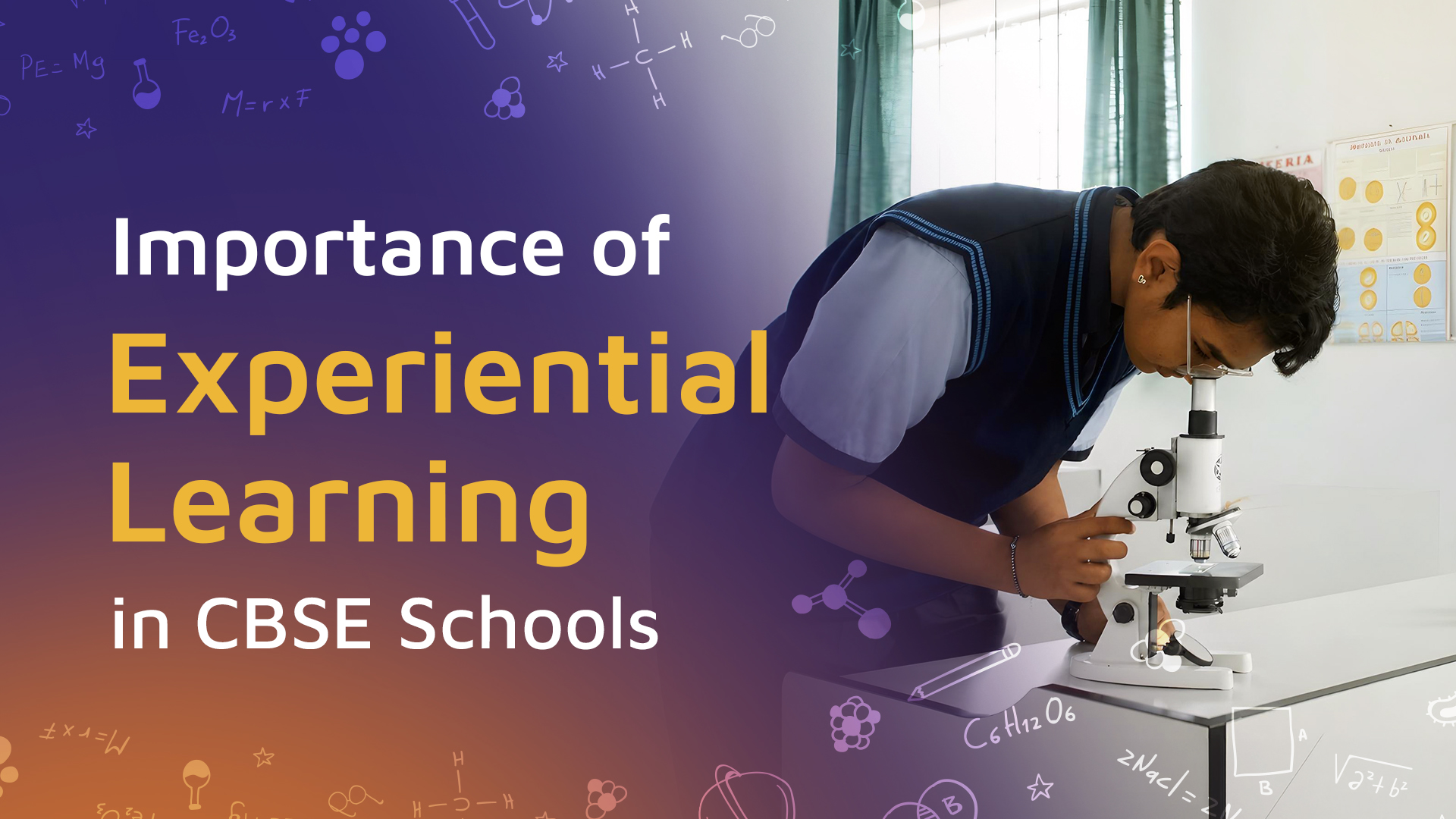
Ask any parent in Bangalore what they want from a school and you will hear a version of the same answer: good marks, yes, but also a child who is curious, confident, and able to think for themselves.
That second part is harder to spot on a campus tour. Facilities are easy to see. Pedagogy is not.
This is where experiential learning comes in. It has become one of the most talked-about ideas in Indian school education, and for good reason: it is the single biggest shift separating a classroom where children absorb information from one where they actually use it.
Here is what experiential learning means in a CBSE school, why the board itself is pushing schools towards it, and the specific questions you should ask before you choose a school for your child.
Experiential learning is learning by doing, followed by reflecting on what happened.
That second half matters. A craft activity on a Friday afternoon is not experiential learning. A child building a simple water filter, testing it, watching it fail, figuring out why, rebuilding it, and then explaining the science of filtration in their own words is experiential learning.
The model most educators refer to is a four-part cycle:
• Experience: the child does something real: an experiment, a field visit, a build, a debate, a role play
• Reflect: they look back at what happened and what surprised them
• Conceptualise: the teacher connects that experience to the concept in the textbook
• Apply: the child uses the idea in a new situation
Rote learning skips straight to step three. Experiential learning earns it.
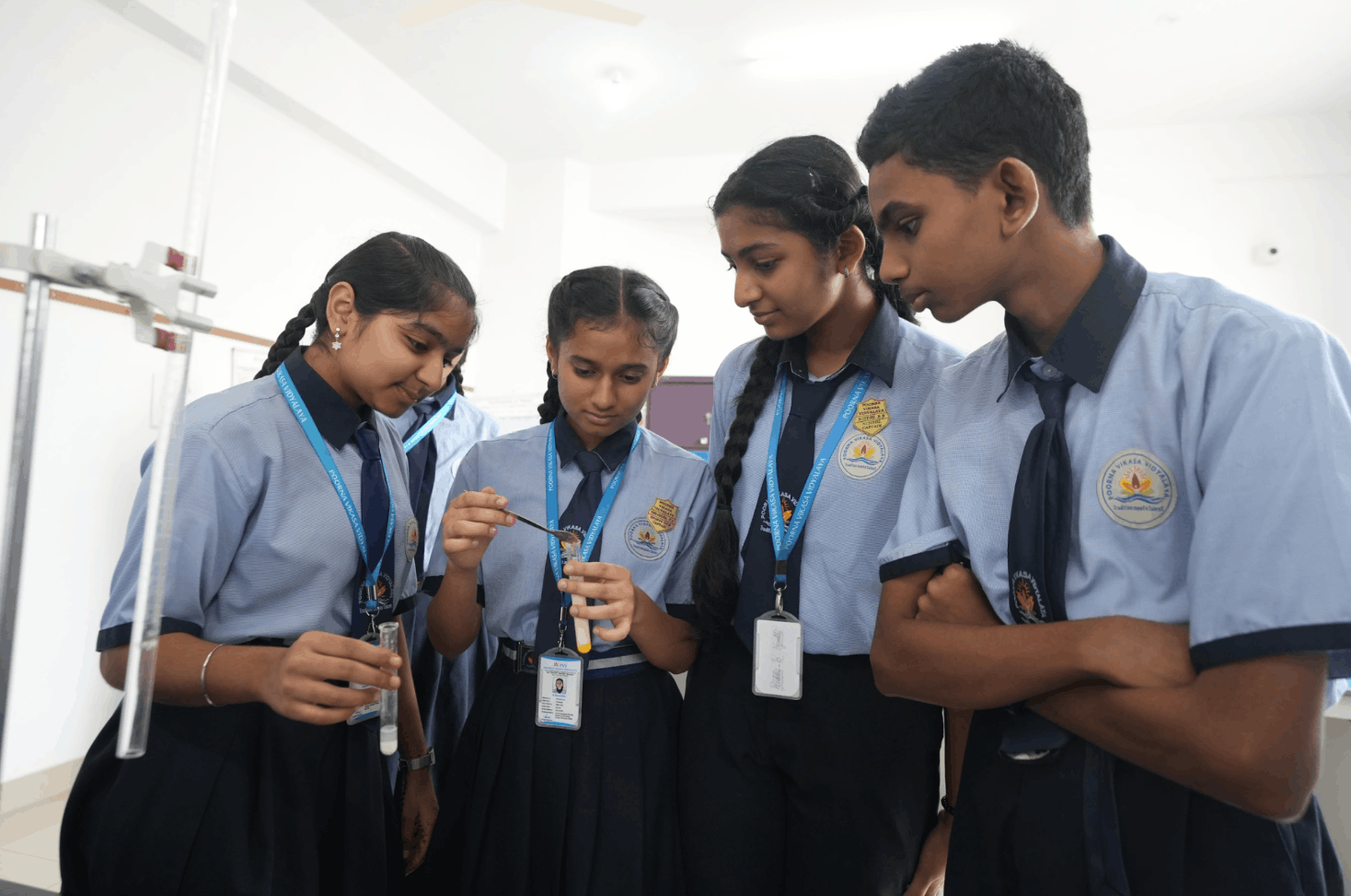
This is not a passing trend or a marketing phrase. It is national policy.
The National Education Policy 2020 explicitly calls for a shift towards experiential learning across all stages and subjects, including art-integrated and sports-integrated education, and story-telling based pedagogy. The NEP also recommends “bagless days” for middle-school students, where children step out of the textbook routine entirely and learn through vocational crafts, local trades, and hands-on exposure.
CBSE has translated this into practice through art-integrated learning as a mandated classroom pedagogy, experiential learning handbooks for teachers, project work built into the assessment structure, and a steady increase in the share of competency-based questions in board papers.
That last point deserves attention from every parent worried about marks. Board papers are increasingly testing whether a child can apply a concept to an unfamiliar situation, not whether they can reproduce a definition. A child taught only to memorise is, year on year, being prepared for an exam that no longer exists.
Experiential learning is not one activity. It changes shape as a child grows.
Pre-primary and early primary (Nursery to Grade 2) Sand and water play, sorting and counting with real objects, nature walks, storytelling with props, dramatic play. Children build number sense and vocabulary through their hands and bodies before they build it on paper.
Primary (Grades 3 to 5) Science through observation and simple experiments. Maths through measurement, money, and model-making. Social studies through maps, community visits, and interviews. Language through skits, book talks, and writing for a real audience.
Middle school (Grades 6 to 8) This is where experiential learning gets ambitious. Robotics and coding projects, working science and maths lab, entrepreneurship challenges, sustainability audits of the campus, debate and Model UN, bagless-day exposure to real trades and crafts.
Senior school (Grades 9 to 12) Investigatory projects, internships and job shadowing, career exploration, research-led assignments, leadership roles in student council and event management. The bridge from school to the world gets built here.
Retention improves. Children remember what they have done far longer than what they have been told. The concept has a story attached to it.
Curiosity survives. Most children start school asking questions constantly. Whether they are still asking them in Grade 8 depends almost entirely on whether the school rewarded questions or answers.
Application becomes a habit. A child who has spent years transferring ideas from one context to another finds competency-based board questions familiar rather than frightening.
Confidence and collaboration grow. Project work means presenting, disagreeing productively, dividing responsibility, and recovering from a plan that did not work. These are not soft skills. They are the skills every workplace screens for.
Failure gets defanged. In an experiential classroom, a prototype that collapses is data, not a disaster. That reframing is one of the most valuable things a school can give a child.
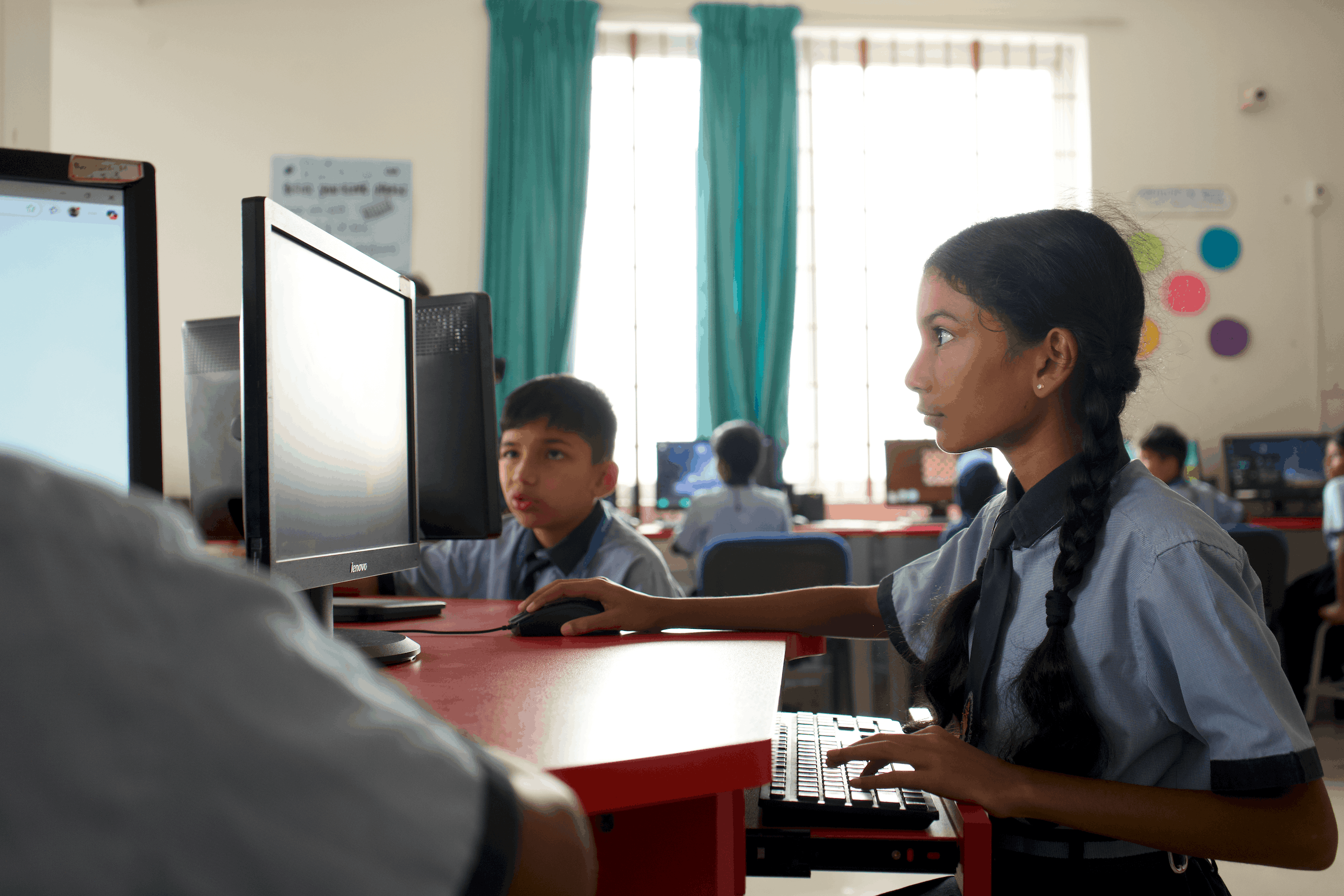
It is a fair question, and the honest answer is that it depends on how the school implements it.
Experiential learning done badly, activities with no link to the syllabus, projects outsourced to parents, “fun” that never gets connected back to a concept will absolutely cost a child time. Experiential learning done well strengthens board performance, because understanding is more durable under exam pressure than memorisation, and because the board is now explicitly testing understanding.
The differentiator is not whether a school does activities. It is whether the school closes the loop between the activity and the concept.
Facilities photograph well. Pedagogy does not. Use these questions to see past the tour.
1. “Can you show me a project my child would have done last term?” Ask to see the actual student work, not the brochure. Look for evidence of iteration and of the child’s own voice.
2. “How do you assess a project?” A good answer describes a rubric covering process, collaboration, and reflection. A weak answer describes marks for neatness.
3. “How are teachers trained for this?” Experiential learning is far harder to teach than a lecture. Ask about ongoing professional development, not a one-time workshop.
4. “How often do children use the labs?” A robotics lab used twice a term is a photograph. Ask for the timetable.
5. “What happens when a project fails?” Listen for whether failure is treated as part of the process or quietly avoided.
6. “How do you connect activities back to the syllabus?” This is the single most revealing question. If the school cannot answer it crisply, the activities are decoration.
7. “What does a normal Tuesday look like for a Grade 5 child?” Not an annual day. Not sports day. A regular Tuesday.
Ask these on a working weekday, not at an open house. You will learn more in twenty minutes of watching a real classroom than in an hour of presentation.
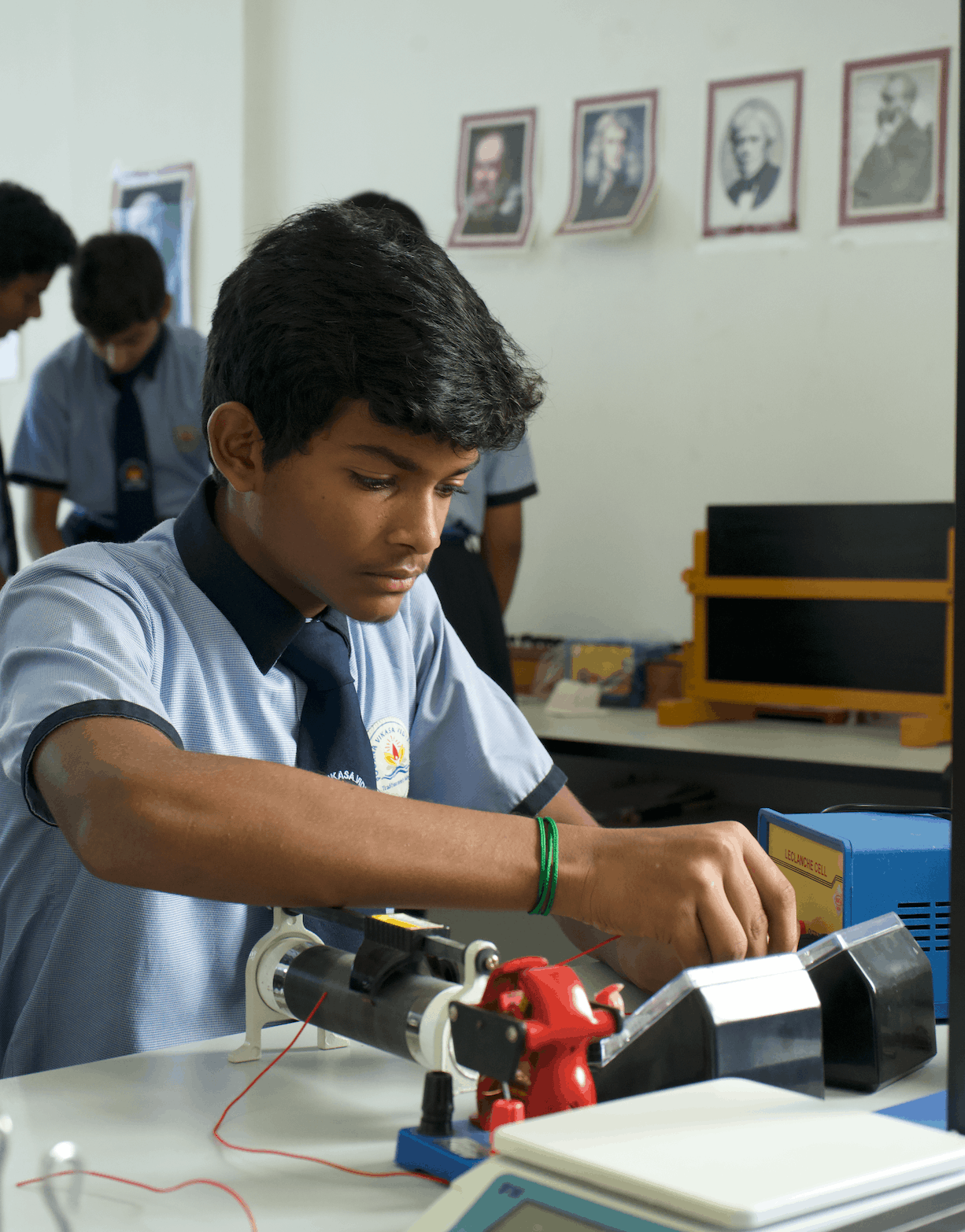
At Poorna Vikasa Vidyalaya, JP Nagar, experiential learning is not a programme bolted onto the CBSE curriculum. It is how the curriculum is delivered.
Our learning framework moves every child through four stages: Discover, Explore, Grow, Excel. Discovery begins with curiosity, questioning, and guided exploration. Exploration applies that curiosity in real-world contexts. Growth comes through practice, collaboration, and feedback. Excellence is the point where knowledge, skill, and values come together in purposeful action.
In practice, that looks like:
The result is what we call Atma-Vikas self-realisation. Children who know what they are good at, because they have had the chance to find out.
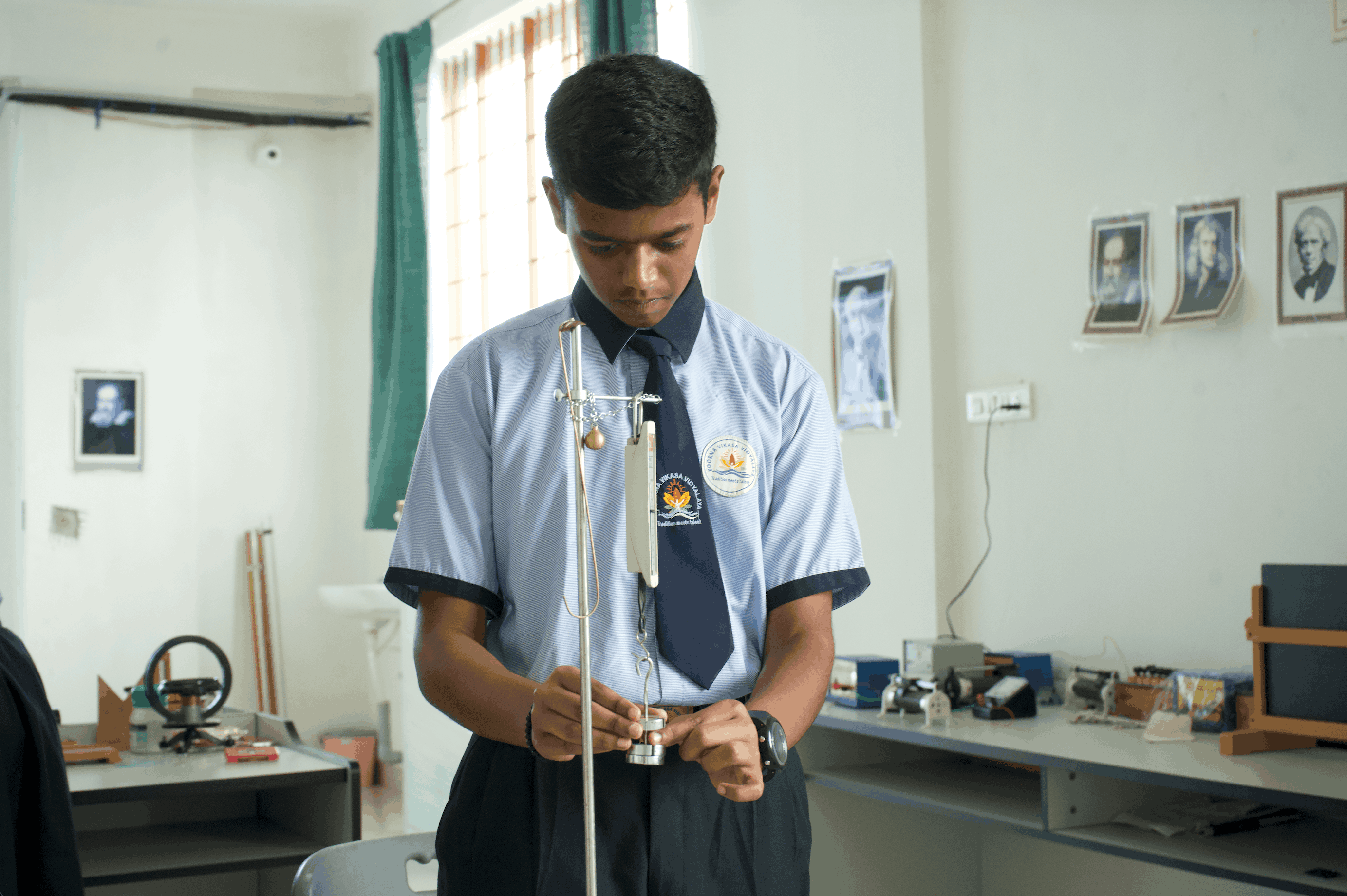
Every CBSE school in Bangalore teaches the same syllabus. What separates them is how that syllabus reaches your child.
A school that helps children build, test, question, and reflect is preparing them for competency-based board exams, for college, and for a working world where the ability to apply knowledge matters far more than the ability to store it.
When you visit schools this admission season, look past the infrastructure. Watch a regular class. Ask what happened last Tuesday. The answer will tell you everything.
Ready to see experiential learning in action? Book a school visit at PVV and spend a morning in a working classroom.