
.jpg)
Choosing the right school curriculum is a key step in shaping your child’s academic journey and overall development. With multiple options like CBSE, ICSE, and IB, parents often feel confused about which board best suits their child’s learning style, interests, and future goals. Understanding the core differences can help you make a confident, informed decision.
CBSE is one of the most widely followed curricula in India and is known for its structured, student-friendly approach. The syllabus focuses on conceptual clarity, especially in Mathematics and Science, and is closely aligned with national competitive exams like JEE and NEET. CBSE uses standardized NCERT textbooks, ensuring uniform learning across schools. It offers a balanced mix of academics, sports, and co-curricular activities, making it ideal for students preparing for higher education within India.
Best suited for:
Students who prefer a clear, exam-oriented structure and plan to pursue higher studies in India.
ICSE offers a broader and more detailed syllabus, with strong emphasis on English language, arts, and humanities, alongside science and mathematics. The curriculum encourages analytical thinking, project work, and practical learning. Assessments are a combination of written exams and internal evaluations, helping students develop strong writing, presentation, and problem-solving skills.
Best suited for:
Students who enjoy in-depth learning, language proficiency, and a well-rounded academic exposure.
The IB curriculum is globally recognized and focuses on inquiry-based, experiential learning. Instead of rote learning, IB encourages students to ask questions, conduct research, and apply knowledge to real-world situations. With components like projects, presentations, and community engagement, IB promotes critical thinking, independence, and a global perspective. It is widely accepted by universities worldwide.
Best suited for:
Students aiming for international education and those who thrive in a flexible, research-driven environment.
There is no single “best” curriculum for every child. The right choice depends on:
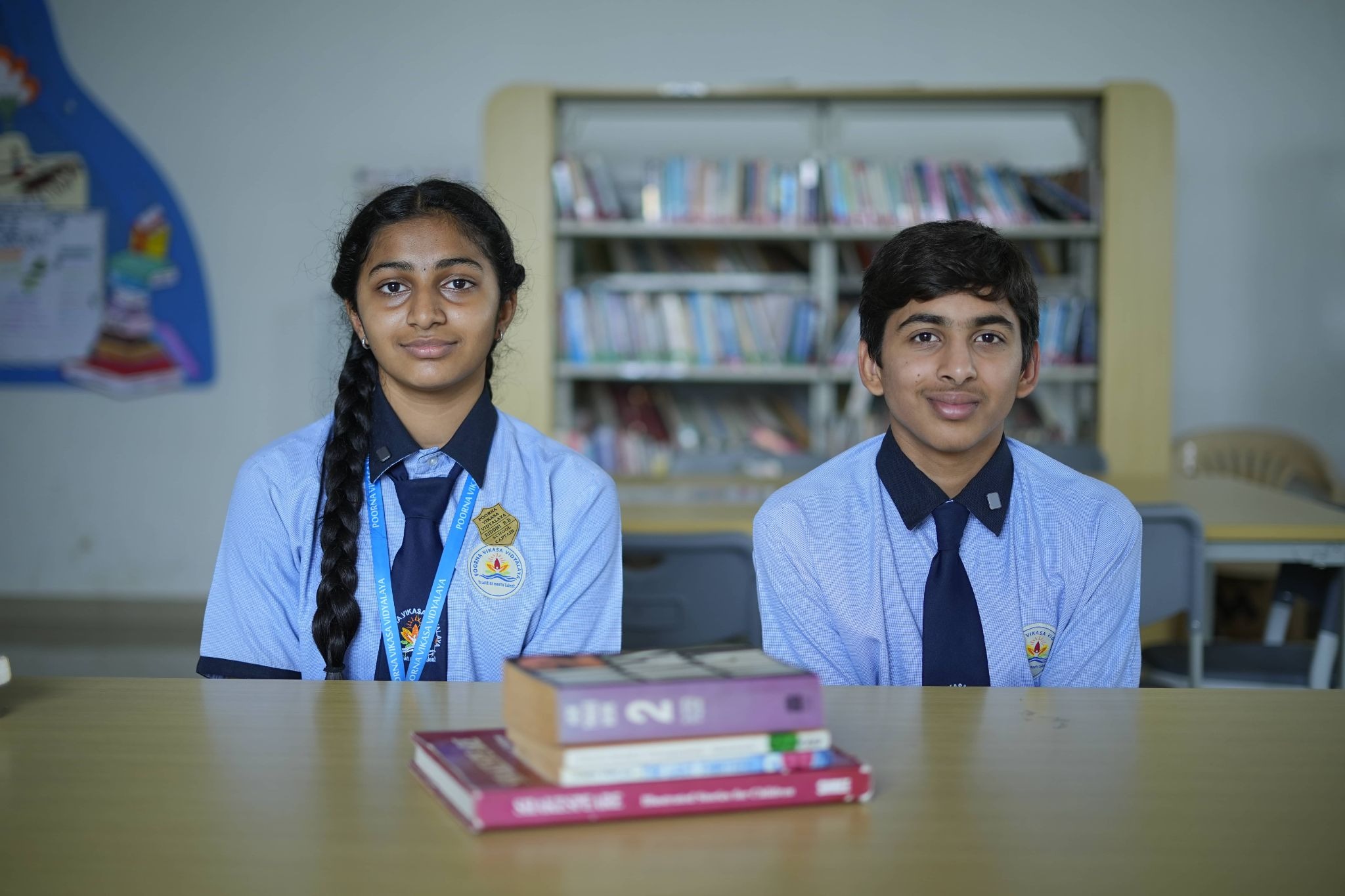
At Poorna Vikasa Vidyalaya (PVV), the CBSE curriculum is delivered with a clear purpose to nurture well-rounded individuals who are academically strong, emotionally balanced, and future-ready. PVV believes that education is not just about scoring marks, but about developing character, confidence, and competence.
The school follows the CBSE framework while enriching it with experiential learning, activity-based teaching, and continuous assessment. Lessons are designed to build strong fundamentals, especially in Mathematics, Science, and Languages, while encouraging curiosity, questioning, and conceptual clarity rather than rote memorization.
PVV ensures that learning goes beyond the classroom. Along with academics, students are actively engaged in:
This balanced approach allows children to discover their strengths, explore interests, and grow at their own pace.
With experienced and dedicated faculty, PVV focuses on understanding each child’s learning needs. Teachers adopt student-friendly teaching methods, regular feedback, and mentoring to ensure that every learner feels supported and motivated. Continuous assessments aligned with CBSE guidelines help track progress and reduce exam pressure.
The CBSE curriculum at PVV equips students with the knowledge and skills needed for:
By combining academic excellence with strong values and global awareness, PVV prepares students to succeed in a rapidly changing world.
For parents seeking a school that offers:
✔ A trusted CBSE curriculum
✔ Focus on holistic development
✔ Strong academic foundation
✔ Safe, nurturing, and value-driven environment
Poorna Vikasa Vidyalaya stands as a confident choice.
Whether you choose CBSE, ICSE, or IB, the goal remains the same: nurturing confident, capable, and curious learners. By understanding each curriculum’s strengths and aligning them with your child’s needs, you can set a strong foundation for their future success.